
What happens when the clapper hits a bell? Together with Björn Lau, Albrecht Schneider and Peter Wriggers we calculated a church bell struck by its clapper with the Finite-Element Method (FEM), as a transient contact problem between clapper and bell.
Measurements
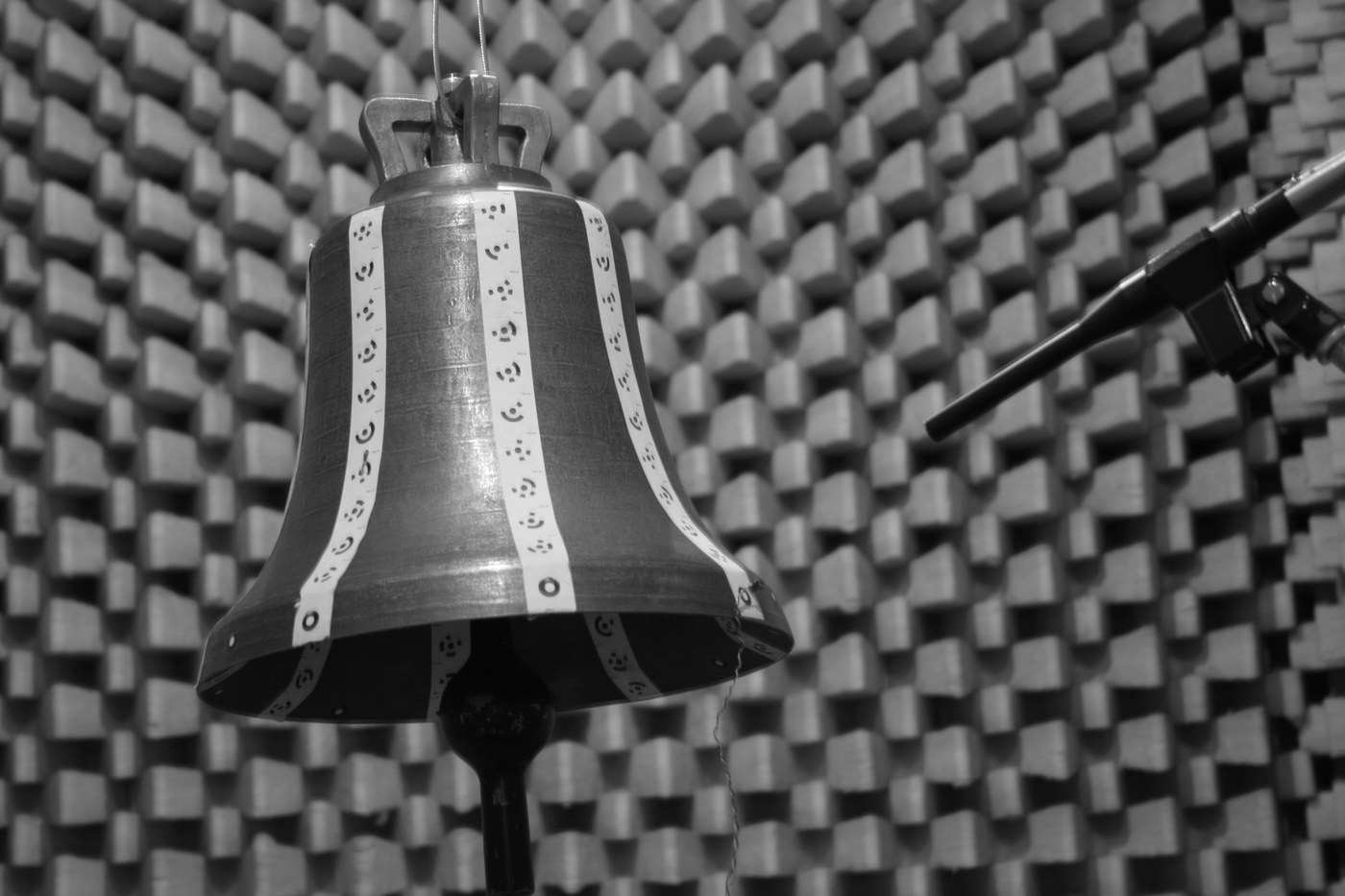
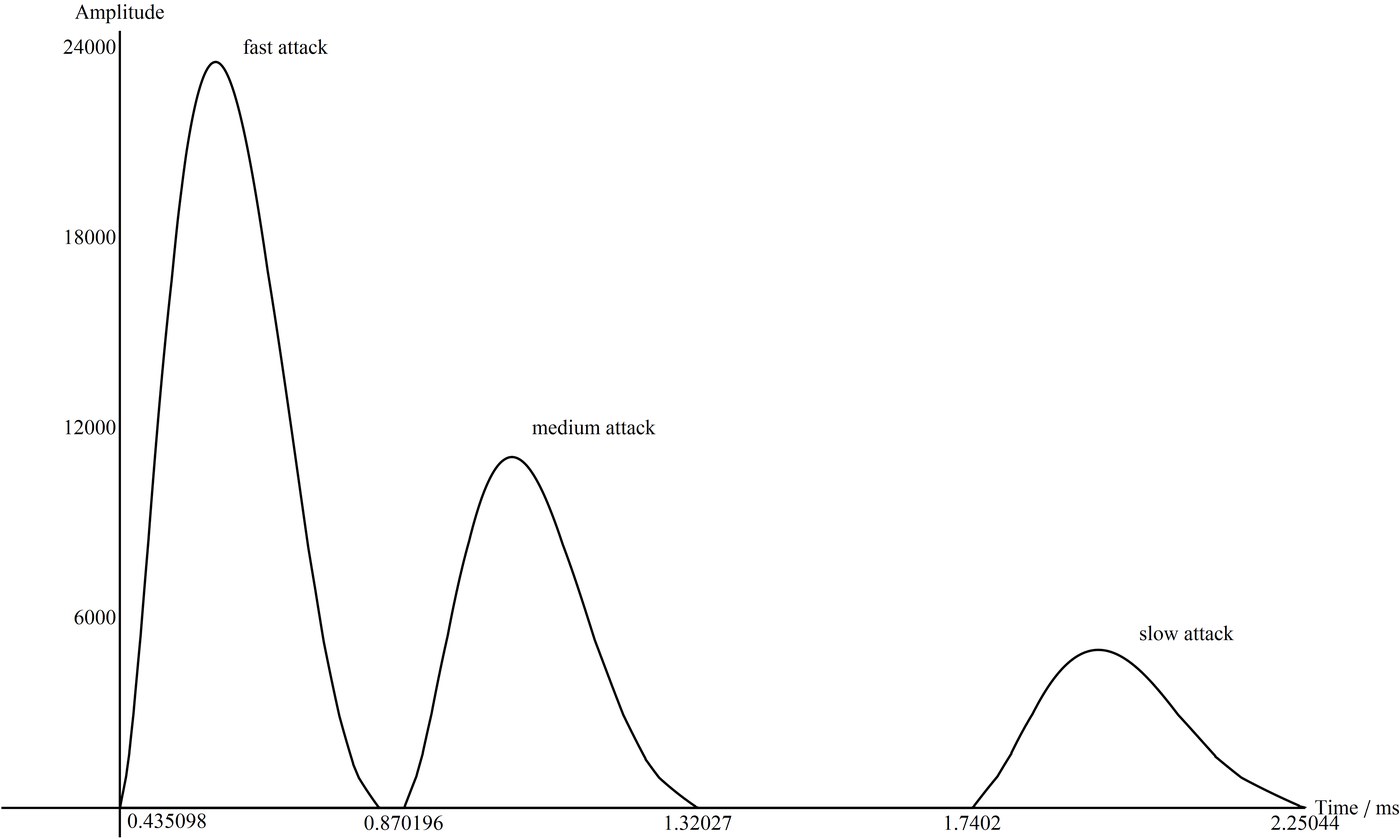
A small D5 church bell was cast especially for this project. The geometry of bell and clapper was measured with a laser, the vibrations of the bell with accelerometers and the radiated sound with a microphone. The force of the clapper was recorded for several strengths of the stroke. Clapper and bell touch each other for only 0.7–0.8 milliseconds. The force rises steeply and falls off more slowly – this asymmetric impulse excites the bell over a wide frequency range.
The model
The eigenfrequencies of the main partials – hum, prime, tierce, quint and nominal – calculated with a model of about 104,000 degrees of freedom agree well with the measured ones. The model also reproduces the different impulse shapes of slow, medium and fast strokes: a faster clapper gives a shorter and much stronger impulse.
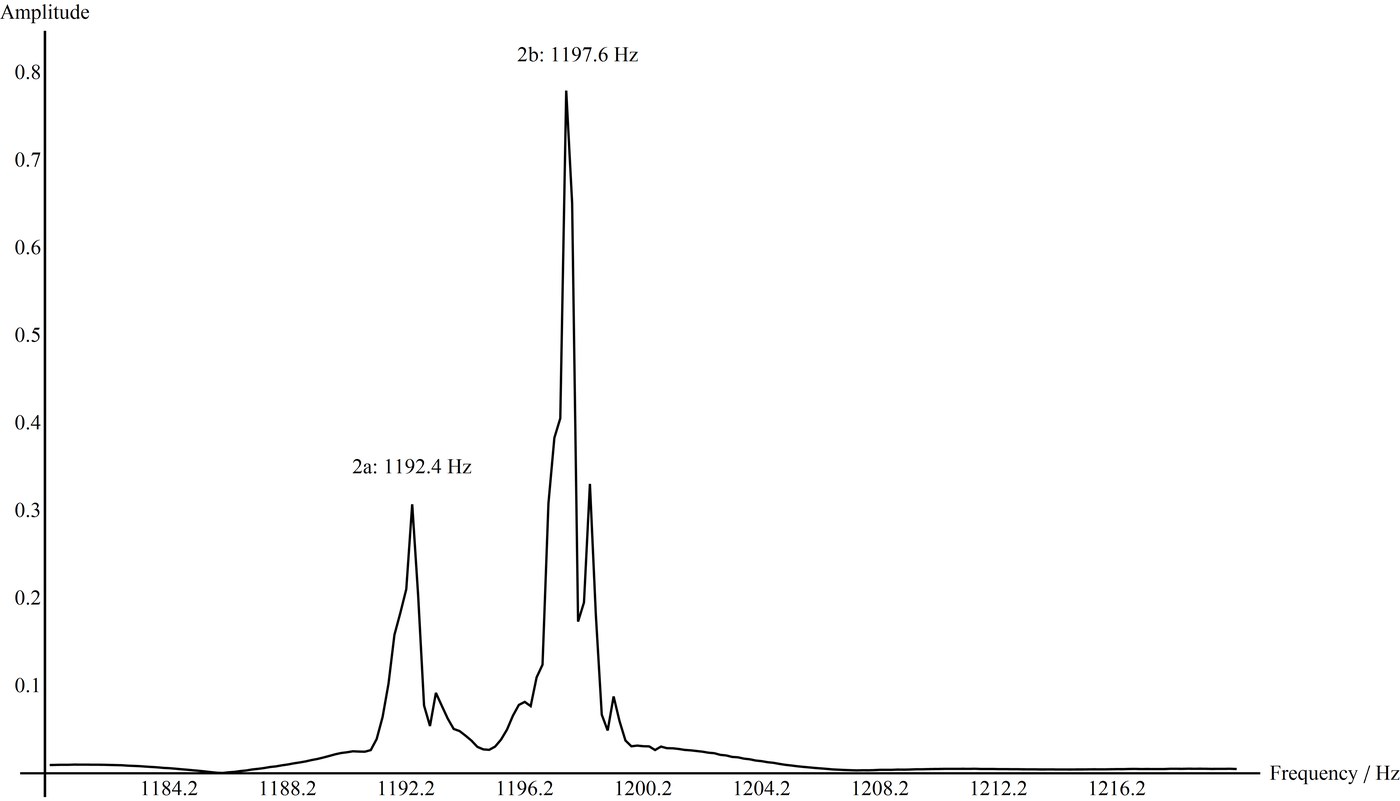
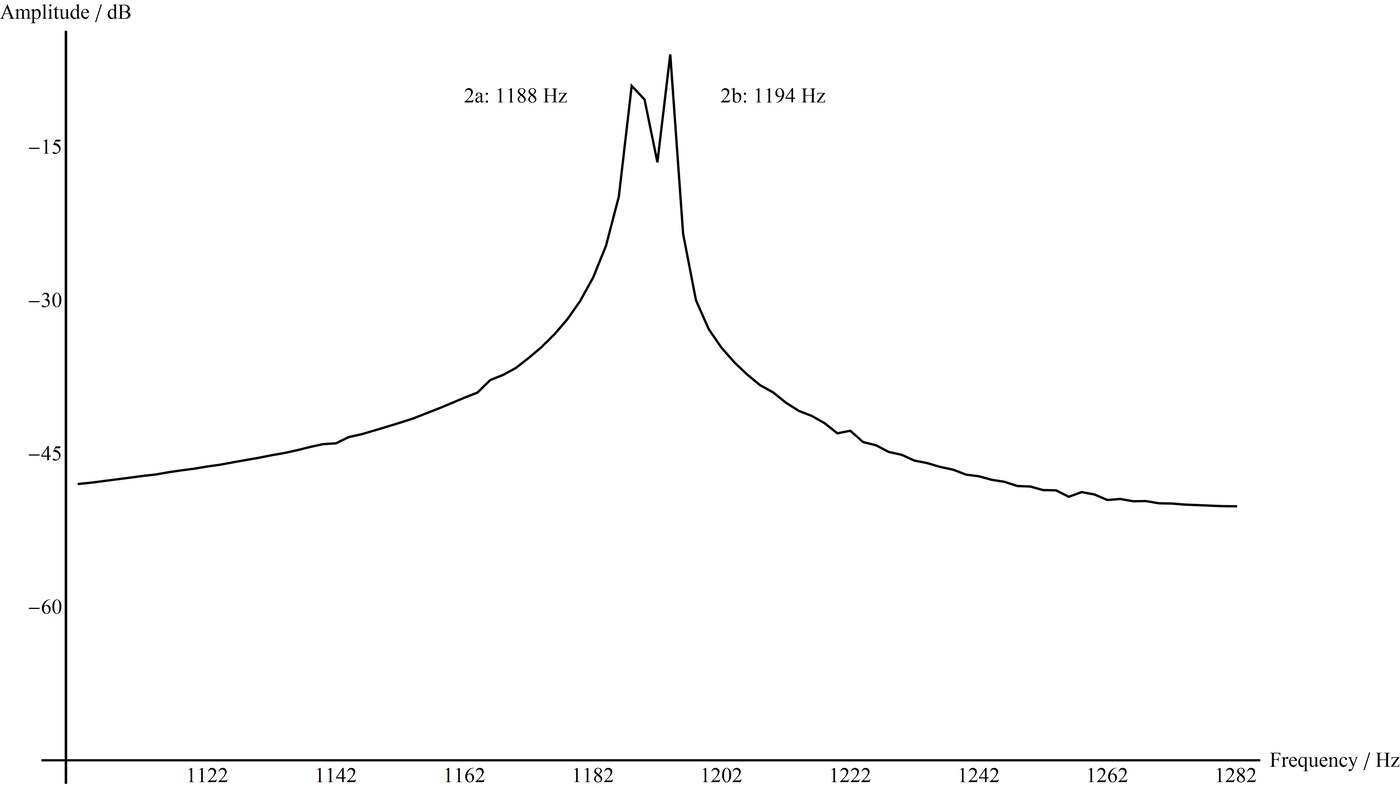
A real bell is never perfectly symmetric. Therefore, its prime partial splits into two neighbouring frequencies, which causes the slow beating of the bell sound. This split appears in the measured sound and also in the model, showing that the geometry was captured precisely.
Literature
Lau, B., Bader, R., Schneider, A. & Wriggers, P.: Finite-Element transient calculation of a bell struck by its clapper. In: Bader, R., Neuhaus, Ch. & Morgenstern, U. (eds.): Concepts, Experiments, and Fieldwork: Studies in Systematic Musicology. Peter Lang Verlag, Frankfurt a.M., 137-156, 2009.
Recent Comments