
Drums are shaped as much by how their skins lose energy as by how they vibrate. Our work models this damping physically and uses machine learning to connect it to what listeners hear.
Jazz drum head tapering
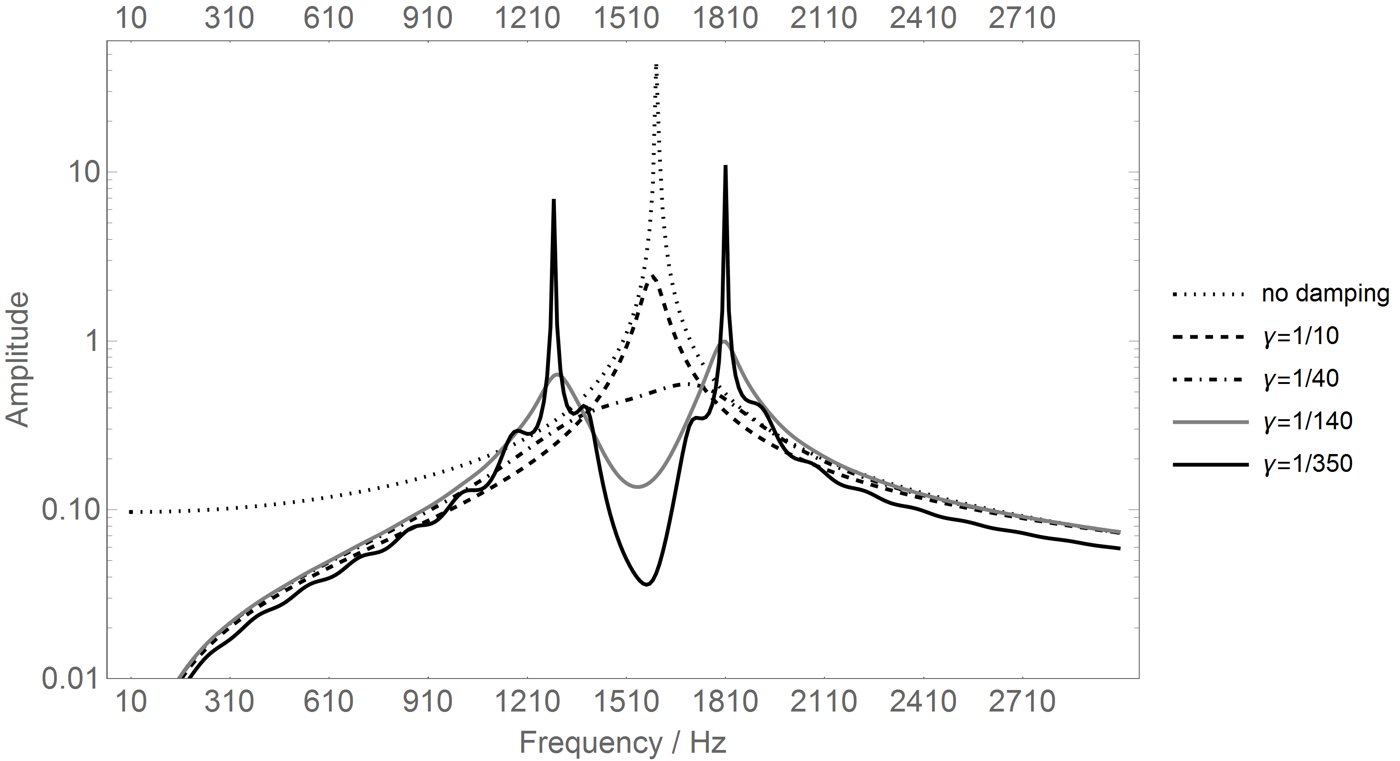
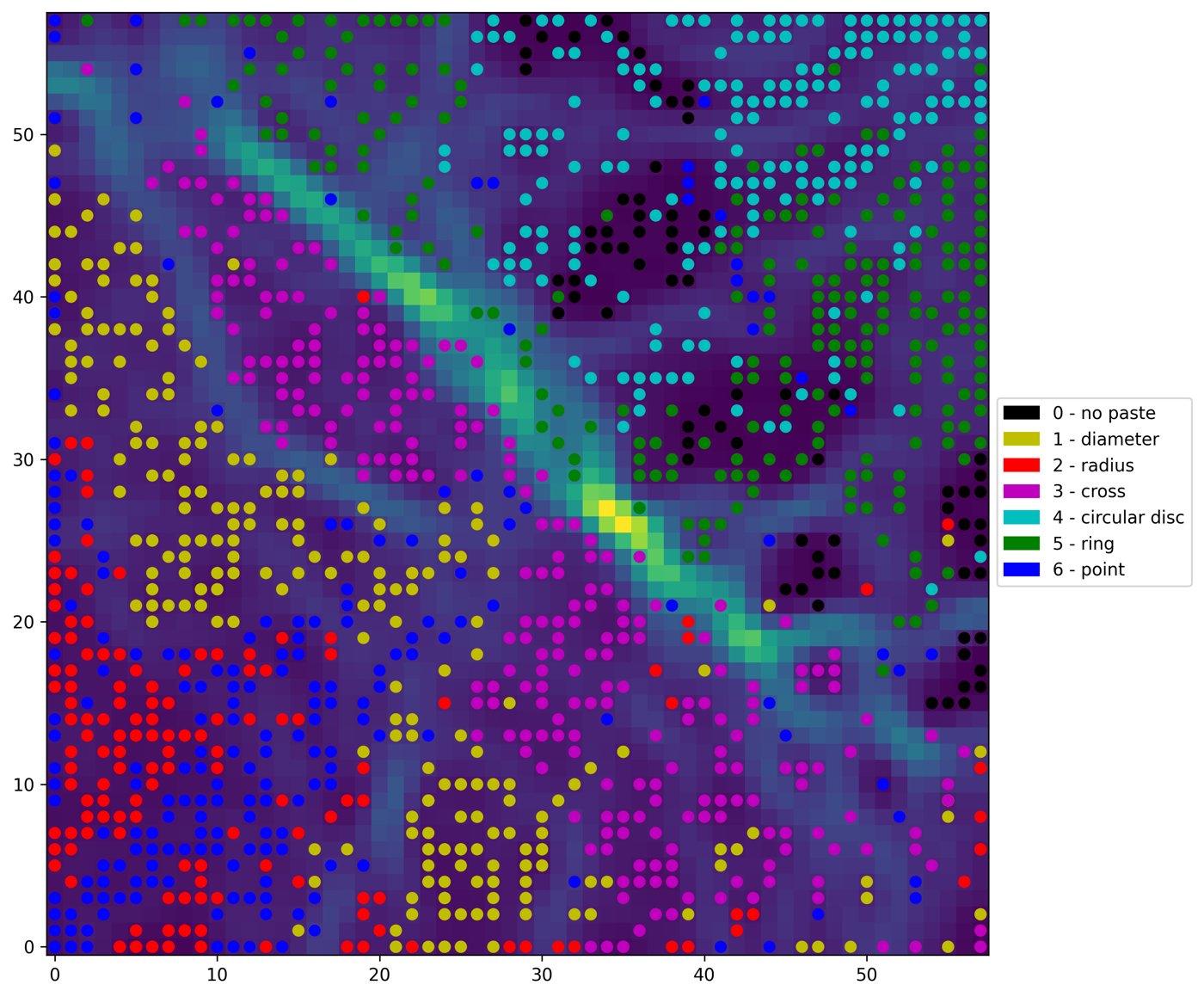
Jazz drummers often tape small pieces of plastic onto their drumheads to make the sound shorter and drier. We simulated this with a physical model of a drumhead that includes realistic, frequency-dependent (viscoelastic) damping, varying where the tape sits, how big it is and what it is made of. A neural network trained on these simulations can recognise the taping on real drums – a step towards reading drummers’ sound choices out of historical jazz recordings.
Damped drum membranes and machine learning
How much a drum skin absorbs its own vibration strongly shapes its sound. A physical model generated thousands of drum sounds with different damping; self-organising maps then grouped them by how they sound, linking material properties to perceived timbre.
See also: Metamaterial drum / string, Pat wain, Viscoelastic damping.
Literature
Bader, R., Alexandraki, C., Martínez, C. & Starakis, M.: Viscoelastic physical modeling synthesis and machine learning analysis of Jazz drum head tapering. J. Acoust. Soc. Am. 157 (4_Supplement), A107, 2025. https://doi.org/10.1121/10.0037555
Martínez Orellanos, C. F. & Bader, R.: Analysis of nonlinear behavior of viscoelastic damping in musical membranes using physics-informed self-organizing maps. APL Mach. Learn. 3 (1), 016102, 2025. https://doi.org/10.1063/5.0242985
Martínez Orellanos, C. F. & Bader, R.: Psychoacoustic analysis of viscoelastically damped membranes using physics-informed machine learning. Proceedings Forum Acusticum / EuroNoise 2025. https://doi.org/10.61782/fa.2025.0708
Martínez Orellanos, C. F. & Bader, R.: Physics- and Psychoacoustics-Based Analysis of Viscoelastically Damped Membranes. DAGA Proceedings 2025.
Recent Comments