
Flutes, reeds and mouth organs from Europe and Asia, studied in the lab and in the field.
Thai khlui flutes
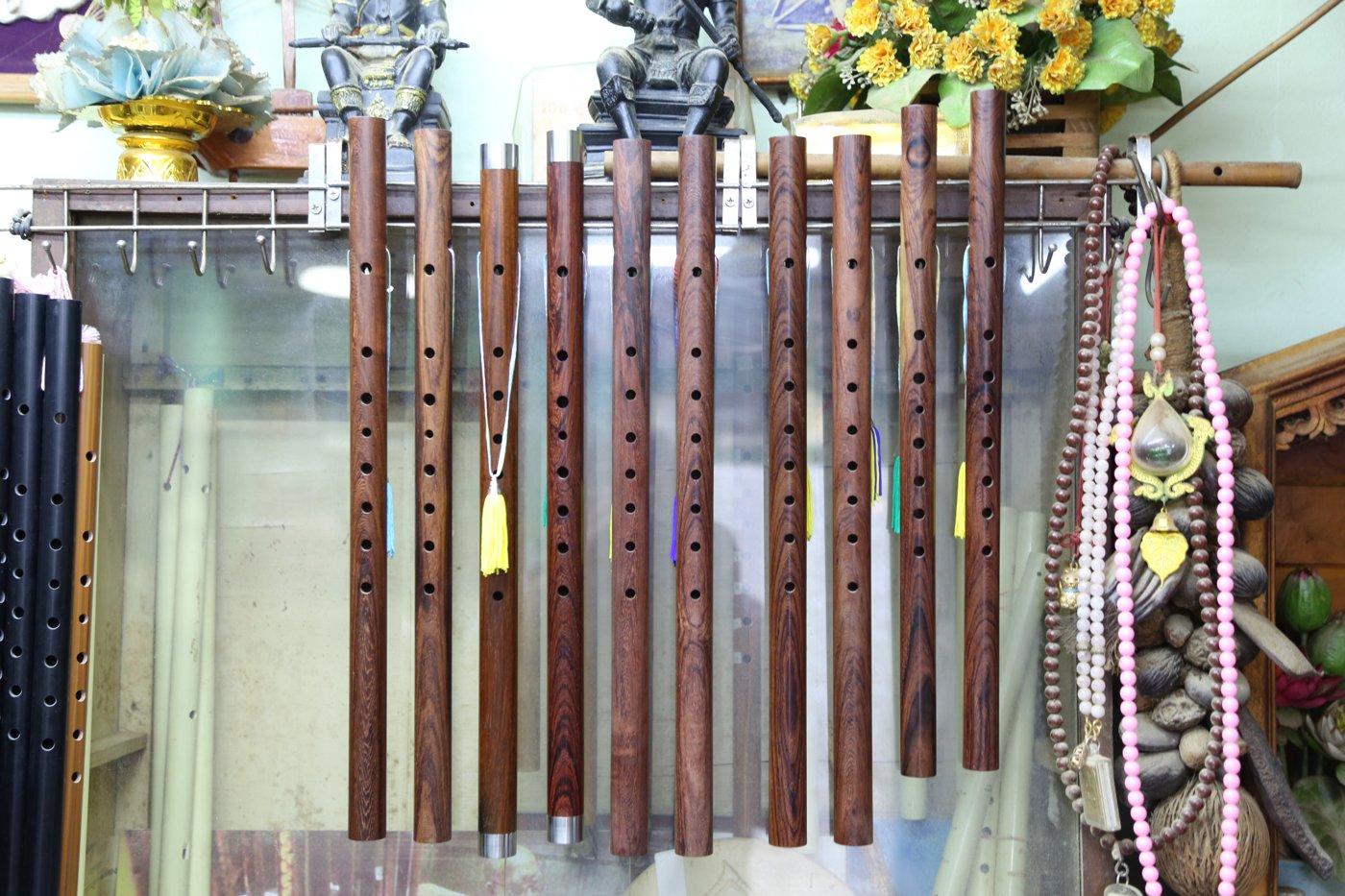
Why do flutes that look alike sound different? Six Thai khlui flutes were played by a blowing machine, so that every flute was blown in exactly the same way, and the inside of each tube was scanned with a laser microscope. Comparing the two shows how the roughness of the inner wall relates to the timbre.
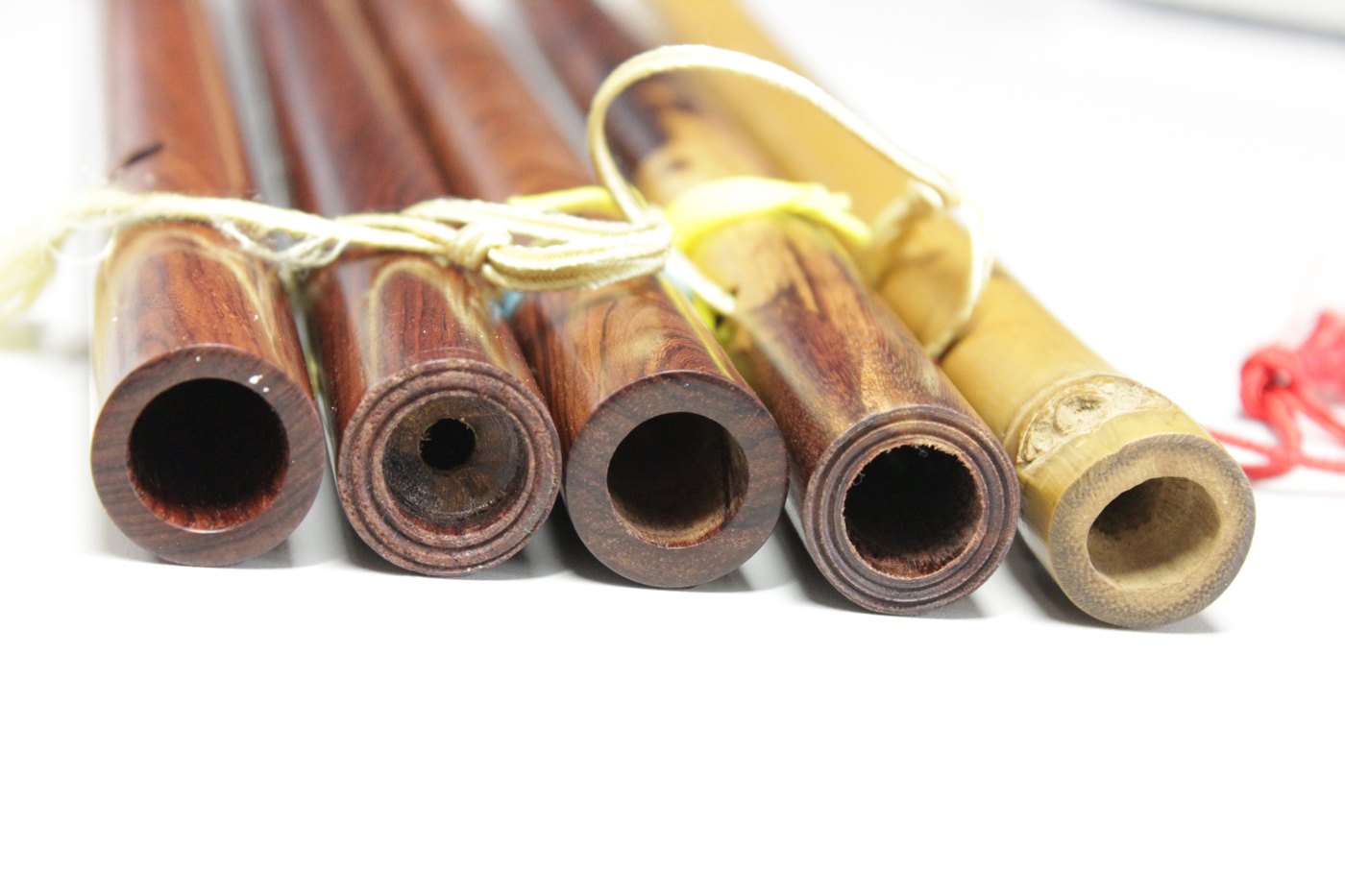
Result. Blown by the machine, the tamarind khlui sounded sharpest and the amboina khlui least sharp. Under the laser microscope, the inner walls of tamarind and rosewood differ significantly in how directional (anisotropic) their surface structure is.
The khaen of the Hmong, Northern Laos
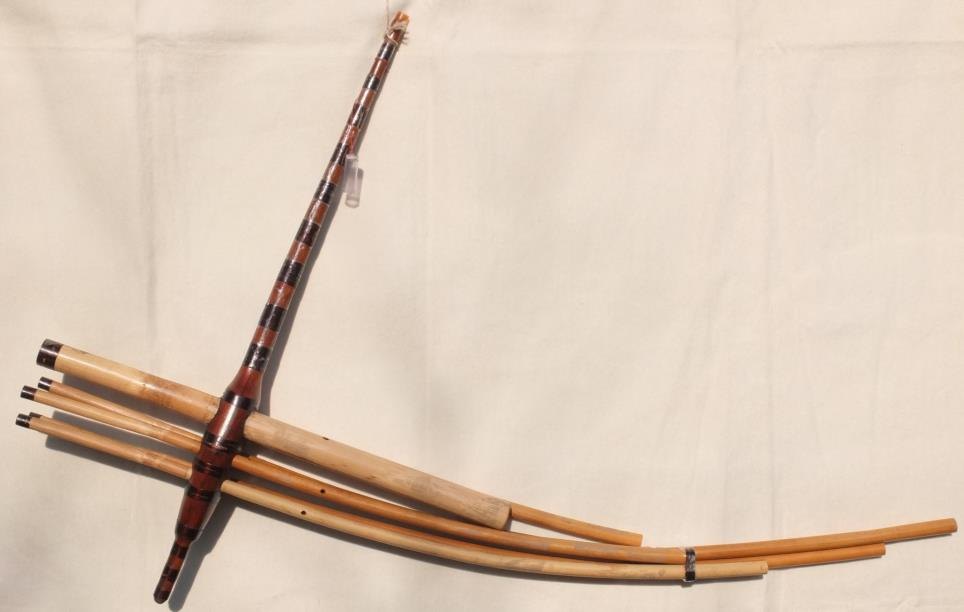
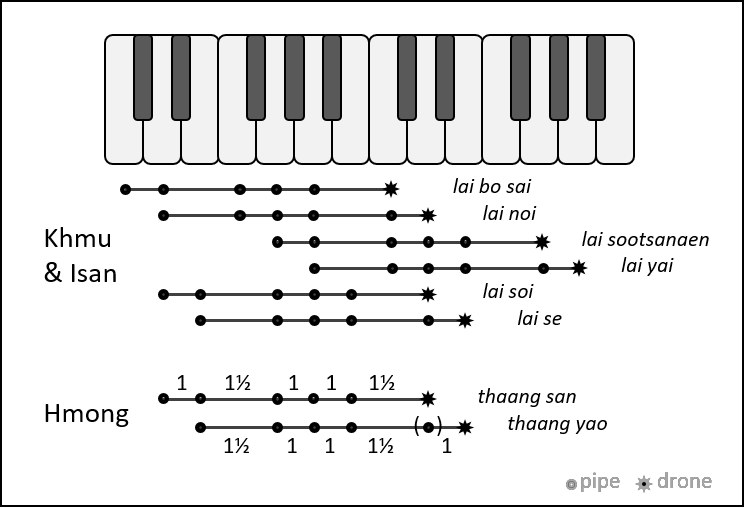
The khaen of the Hmong in Northern Laos is a free-reed mouth organ that differs from other Lao khaens and from relatives such as the Chinese hulusi and hulusheng in construction, playing style and sound. Its tone holes work on two different principles: on the drone pipe, opening a hole changes the pitch; on the other pipes, opening a hole silences the pipe. The two drones, a whole tone apart, are the highest notes of the instrument, and the other pipes are tuned in nearly pure intervals – third, fourth, fifths and octaves – below them, so that they almost lock in with the drones.
The hulusi
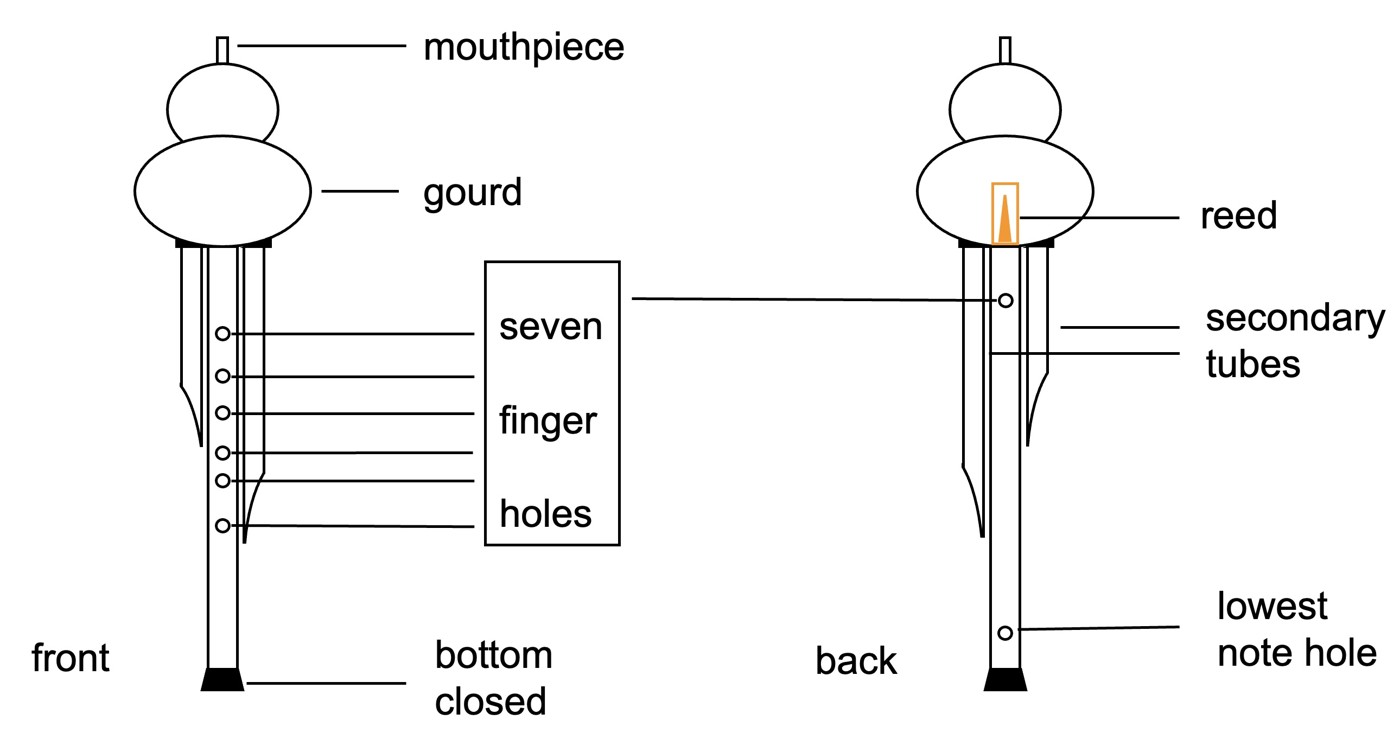
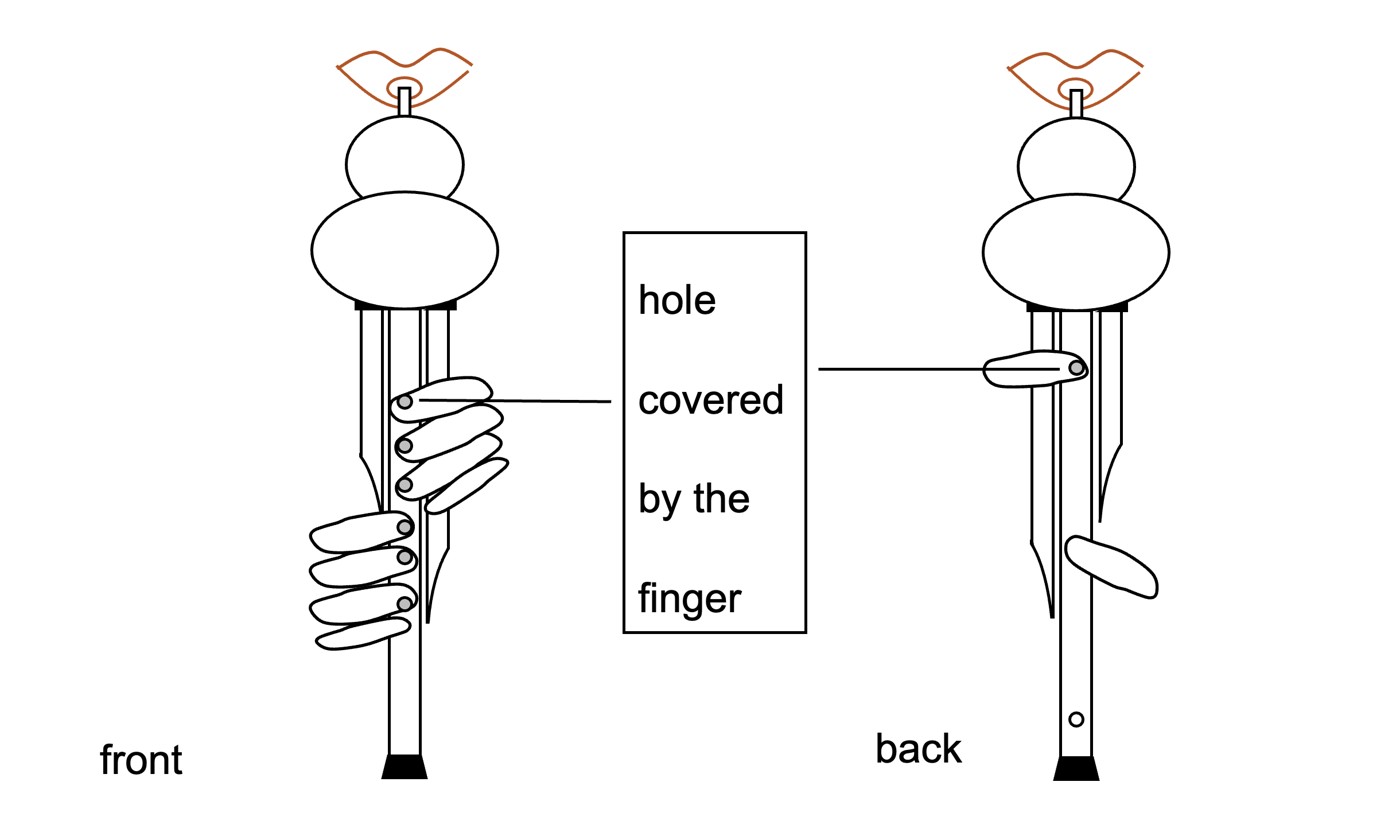
The hulusi, a free-reed gourd flute from Southwest China, was measured in detail: its reed, its playing techniques and its timbre. Machine learning sorts the sounds by articulation and shows which sound features players actually change.
Recorder and the vocal tract
When recorder players change the shape of their mouth and throat, the sound changes. Computer simulations of the air flow show how turbulence from the player’s vocal tract enters the instrument and colours the tone.
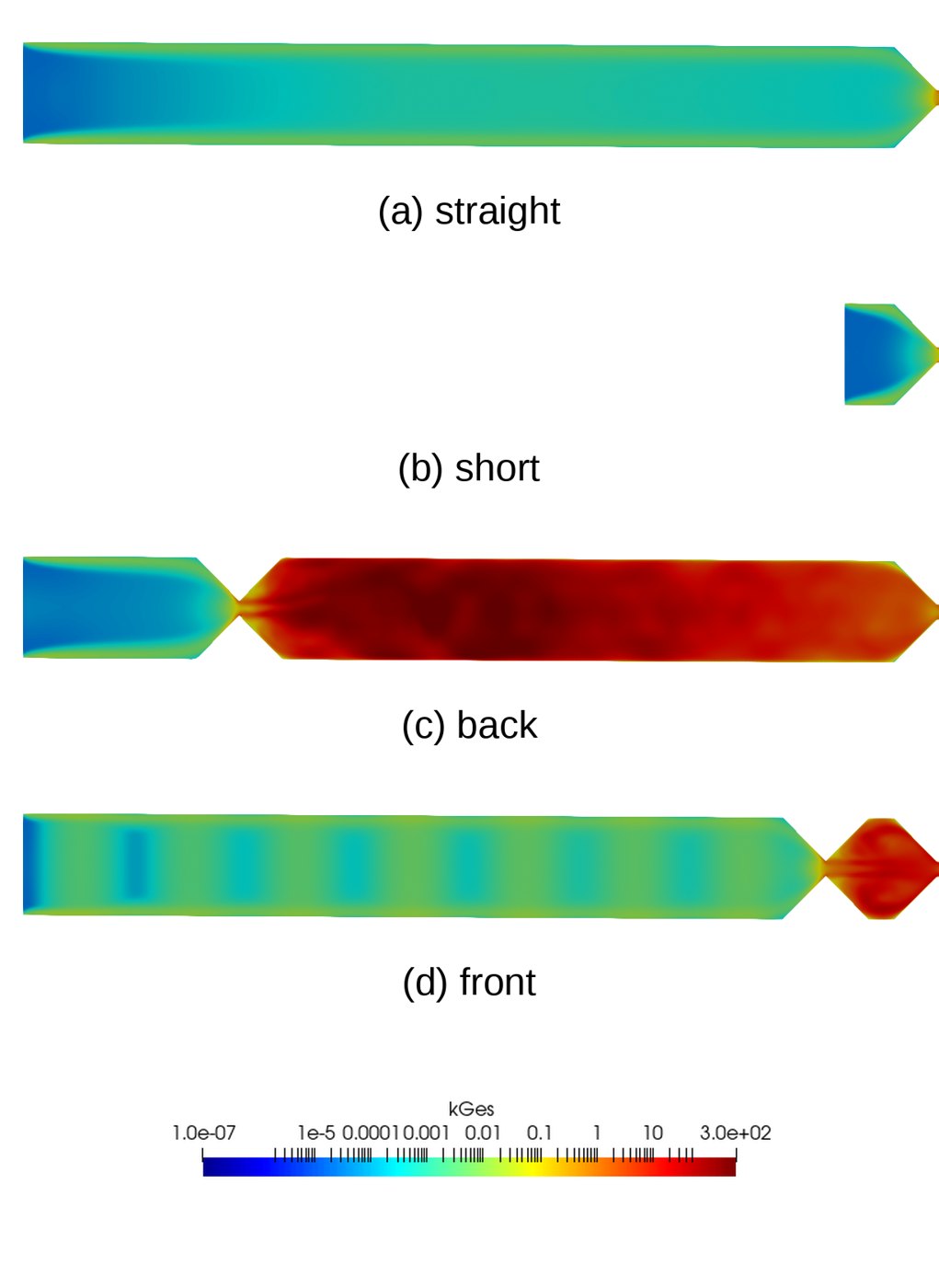
More flow simulations of organ pipes, flutes and recorders: YouTube channel of Jost Fischer.
Literature
Zamboni, F., Mirsalehie, H. R. & Bader, R.: Blowing-machine timbre and laser microscopy inner wall roughness measurements of six Thai Khlui Flutes. Proceedings DAGA 2026, 975.
Mores, R., Bader, R. & Linke, S.: The khaen of the Hmong people in Northern Laos. Proc. Mtgs. Acoust. 58, 035008, 2025. https://doi.org/10.1121/2.0002077
Hulusi: reed vibrations and reed–pipe coupling
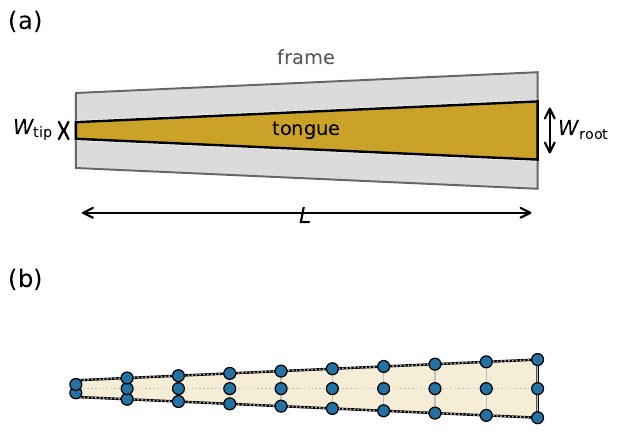
The reed and its frame are cut from one single brass sheet, the tongue becoming narrower towards its free end. The reed is coupled to the pipe, which normally sets the pitch. With lower blowing pressure, however, the reed’s own frequency takes over the sound. With a laser Doppler vibrometer we measured the reeds of six handmade hulusi – two each in F, B♭ and C – point by point at 29 points, for nine fingerings and two blowing pressures.
The sound contains two frequencies: a tube-dominant one, locked to the resonance of the air column and carrying a complete harmonic series, and a reed-dominant one, which is not harmonic to it. The two lie 38 to 523 Hz apart – from about three semitones to more than an octave. The reed-dominant frequency rises with the blowing pressure by about 160 cents per kPa.
When the air supply decreases, the coupling between reed and pipe suddenly breaks down. The instrument falls silent for about 100 milliseconds and then sounds again at the reed’s own frequency, within 0.1 Hz.
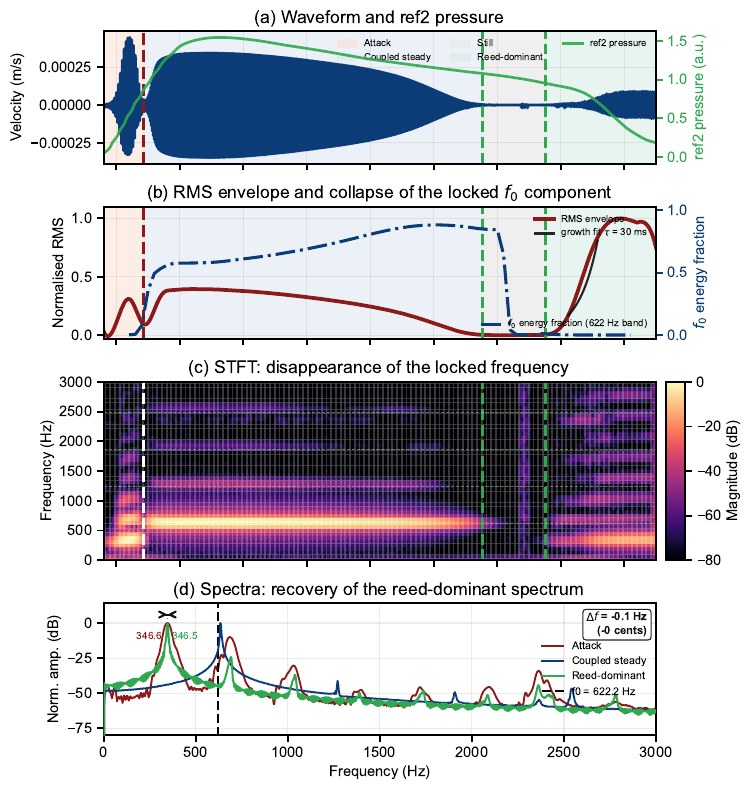
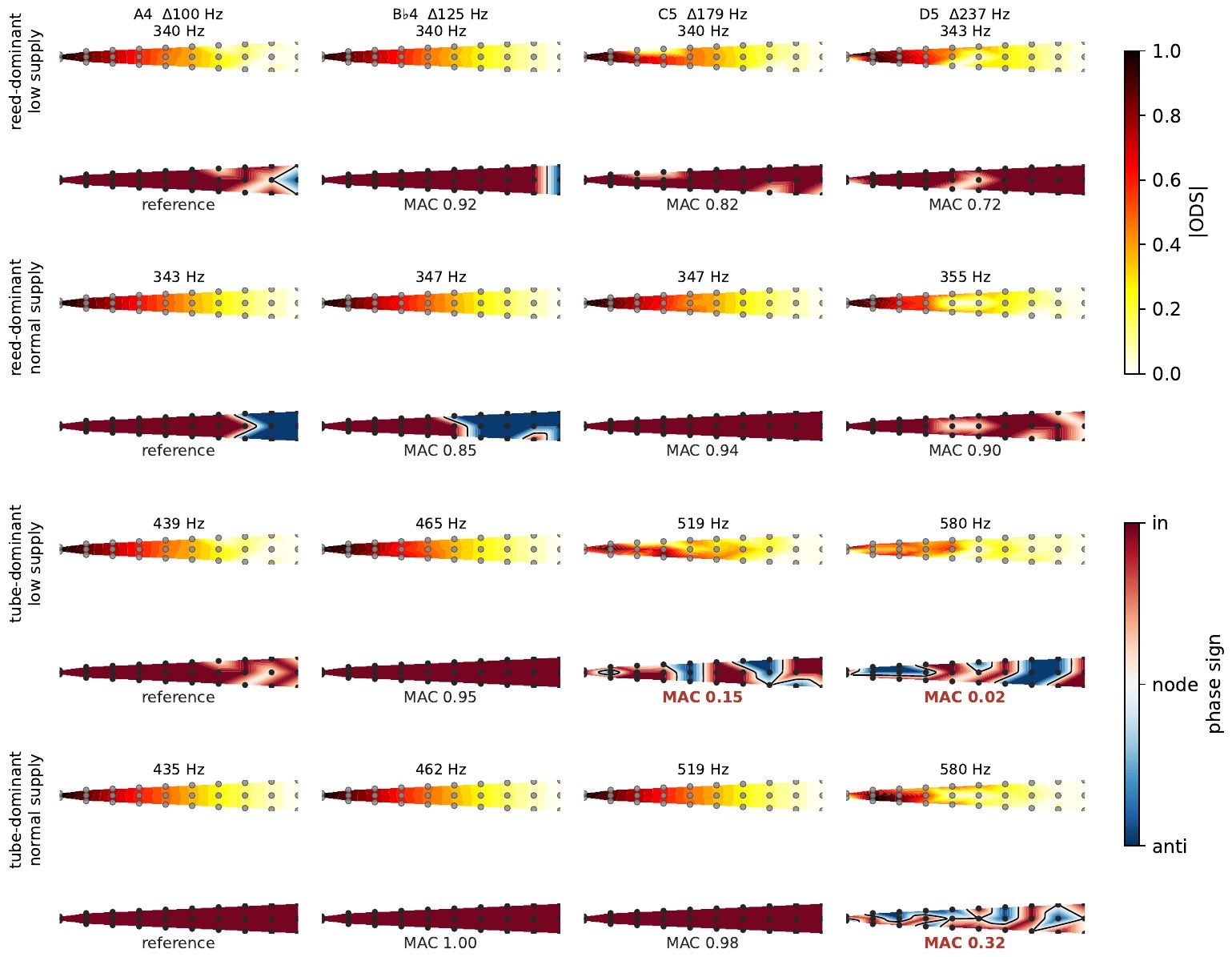
The vibration patterns of the reed are not its eigenmodes but the shapes of one single self-sustained oscillation and its harmonics: their frequencies stand in strict 1:2:3 ratios, far from the ratios of a bending beam. In the reed-dominant state the reed simply bends, the same for all instruments, fingerings and pressures, and without any torsion. In the tube-dominant state the pattern becomes unstable near the oscillation threshold, together with its torsional part.
Xia, Y., Bader, R. & Linke, S.: Vibration patterns and reed–pipe coupling in the free reeds of the hulusi. arXiv preprint, 2026.
Xia, Y. & Bader, R.: Experimental investigation into the reed structure and articulation modes of the western Chinese instrument Hulusi. Proceedings DAGA 2025, 1-4.
Xia, Y. & Bader, R.: Machine Learning of Timbre Features for the Western Chinese Free-Reed Instrument Hulusi. Proceedings DAGA 2024, 1050-1053.
Nordblom, N. & Bader, R.: Vocal tract turbulence and recorder sound – a CFD approach. Proceedings Forum Acusticum / EuroNoise 2025. https://doi.org/10.61782/fa.2025.0964
Recent Comments