
Can the same mathematics that describes how a saxophone reed and its tube settle into a tone also describe how a city planning process develops?
The idea
In a planning process many parties pursue their own interests – artists want affordable studios, residents want a liveable neighbourhood, an investor wants a return, the city wants social peace. Each reacts to the others, adapts its own position over time and is hit by outside events. The Impulse Pattern Formulation (IPF), developed for musical instruments and the brain, models exactly such systems of interacting, self-adapting parts. Here every stakeholder is one part of the system, and its state – health, artistic freedom, financial situation – is followed step by step.
A real case
The model was built around a Hamburg example: the Frappant building in Altona, an empty 1970s shopping centre taken over by around 150 artists, then bought by IKEA, with citizens’ movements for and against. Six stakeholders were identified – the artists, local stores, local residents, residents of Altona, the investor and the City of Hamburg.
What the model can do
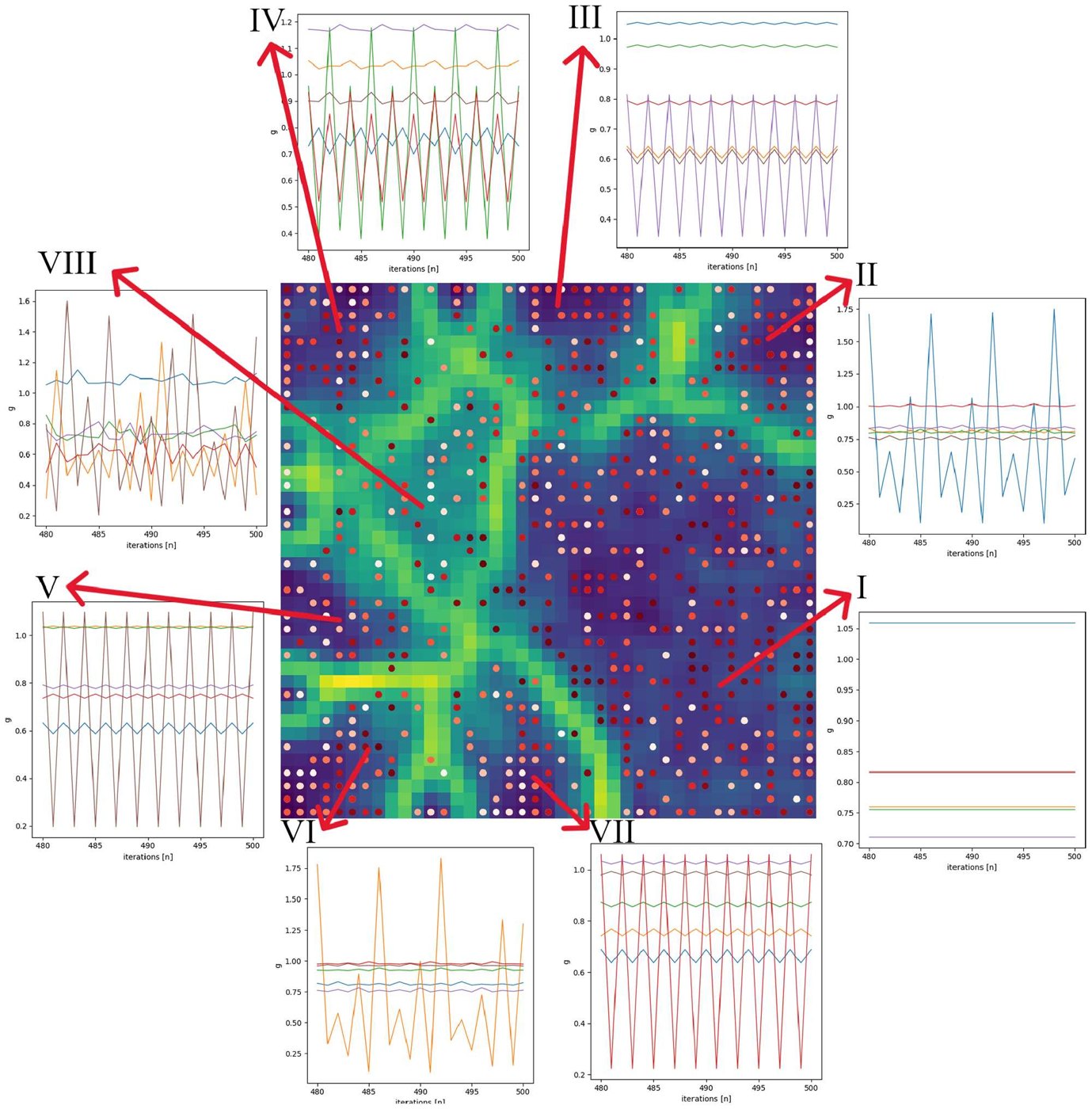
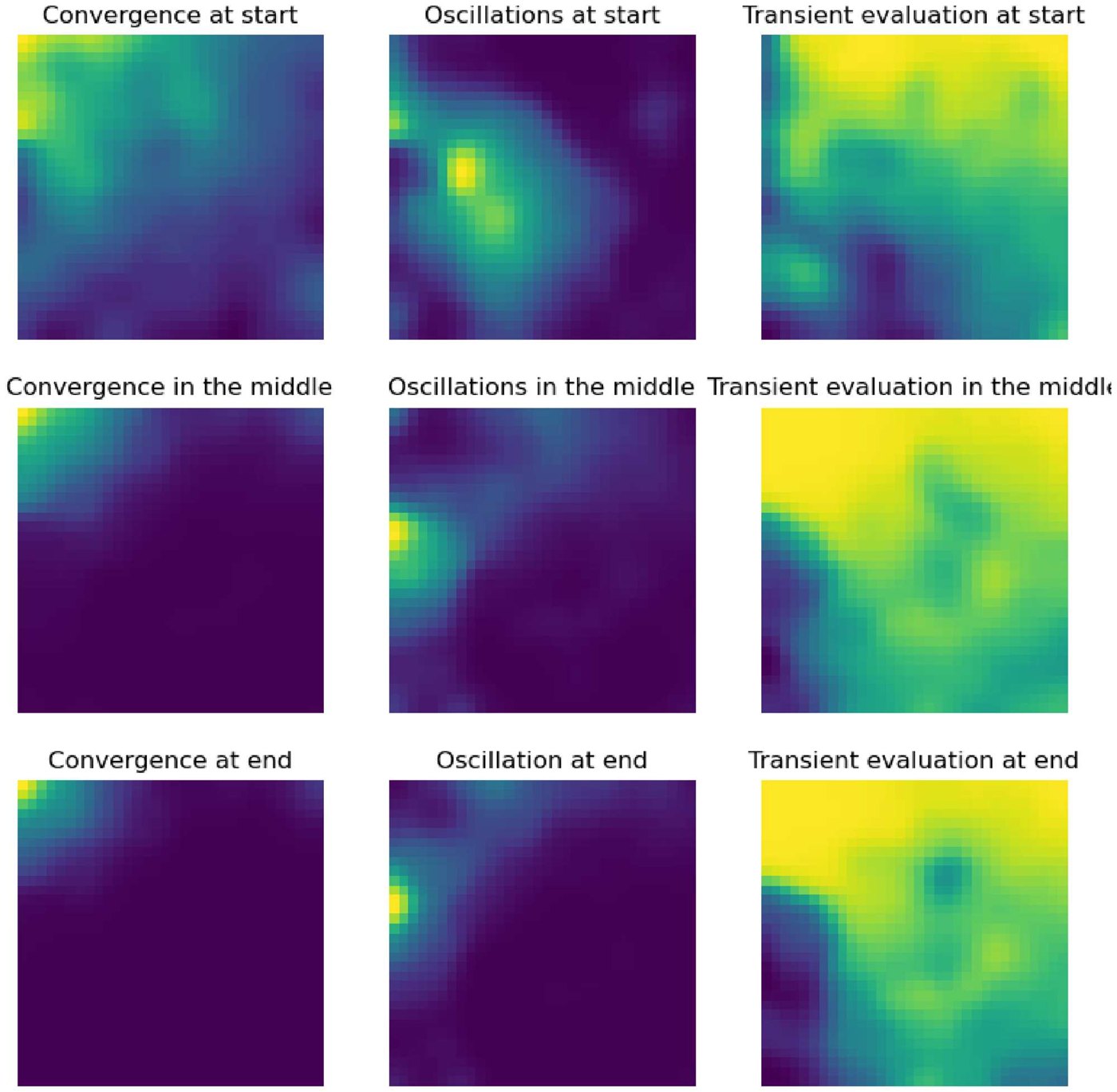
With only a few equations and parameters, the social IPF produces all the developments seen in real planning: parties converging on a common position, drifting apart, oscillating, or behaving chaotically, and reacting to an outside shock by adapting, converging or breaking down. Thousands of such scenarios are sorted by a self-organising map, so planners can see which combinations of attitudes and interactions lead to a desired outcome – and which stakeholders would come under pressure.
Hexenwäldchen
The Hexenwäldchen is a small wood at Steenmoor/Rahlaukamp in Hamburg-Tonndorf (Wandsbek). For years it was fenced off, and whether it should become building land or stay a forest was a political issue in Hamburg. An interactive application applies the social IPF to this case: Hexenwäldchen.
Literature
Bader, R., Linke, S. & Gernert, S.: Nonlinear dynamical social and political prediction algorithm for city planning and public participation using the impulse pattern formulation. Chaos 34, 093130, 2024. https://doi.org/10.1063/5.0211618
Recent Comments