
Fieldwork in Bangkok (2024) and Northern Thailand (2025): flute makers, hill-tribe music and temple gongs.
Khlui flute makers
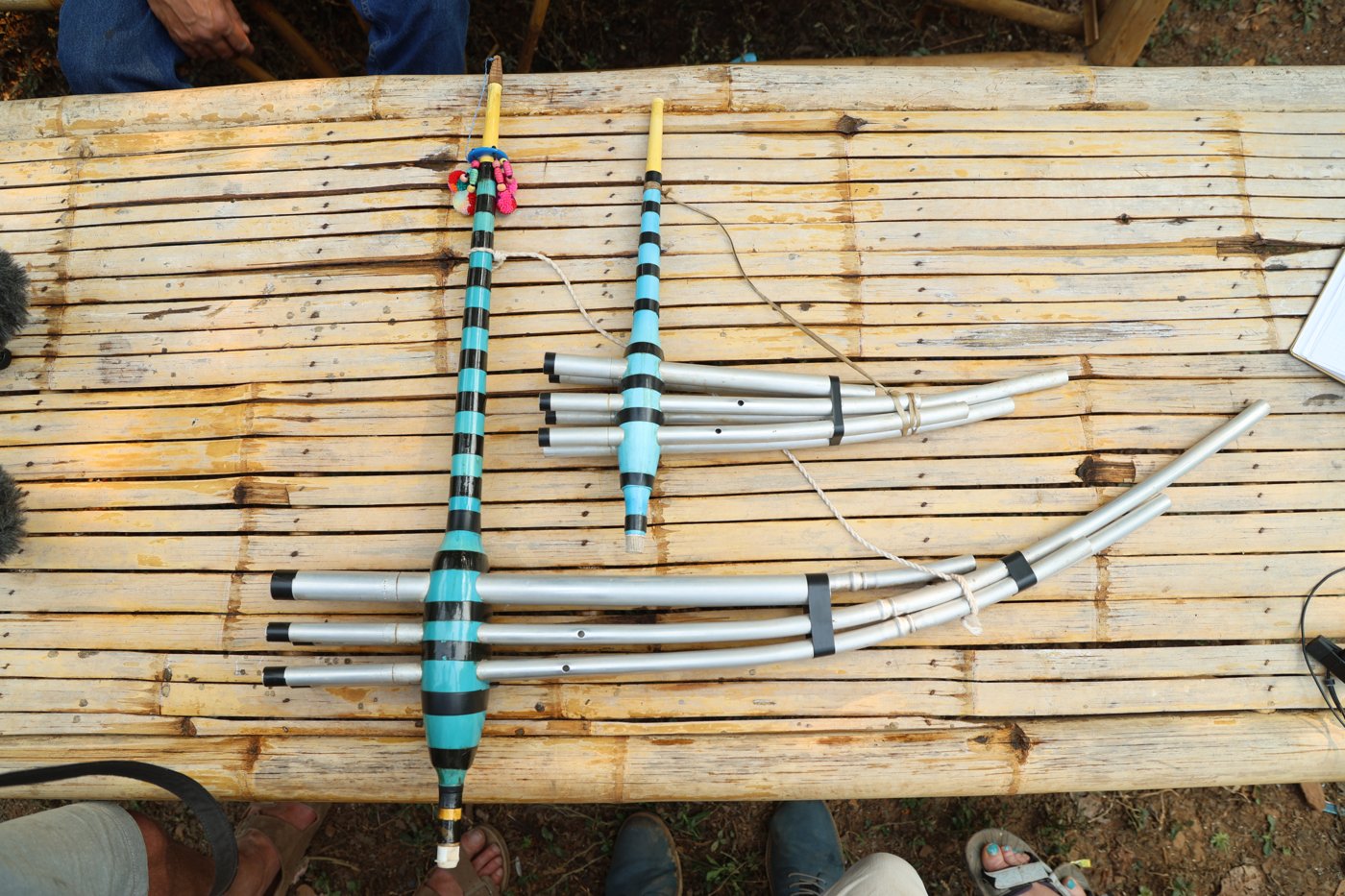
In Bangkok’s Ban Lao community, families have made bamboo and wooden khlui flutes for generations. We documented their workshops and recorded khlui players. Six further khlui, collected in Northern Thailand, were later measured in Hamburg with a blowing machine and a laser microscope (see Wind Instruments).
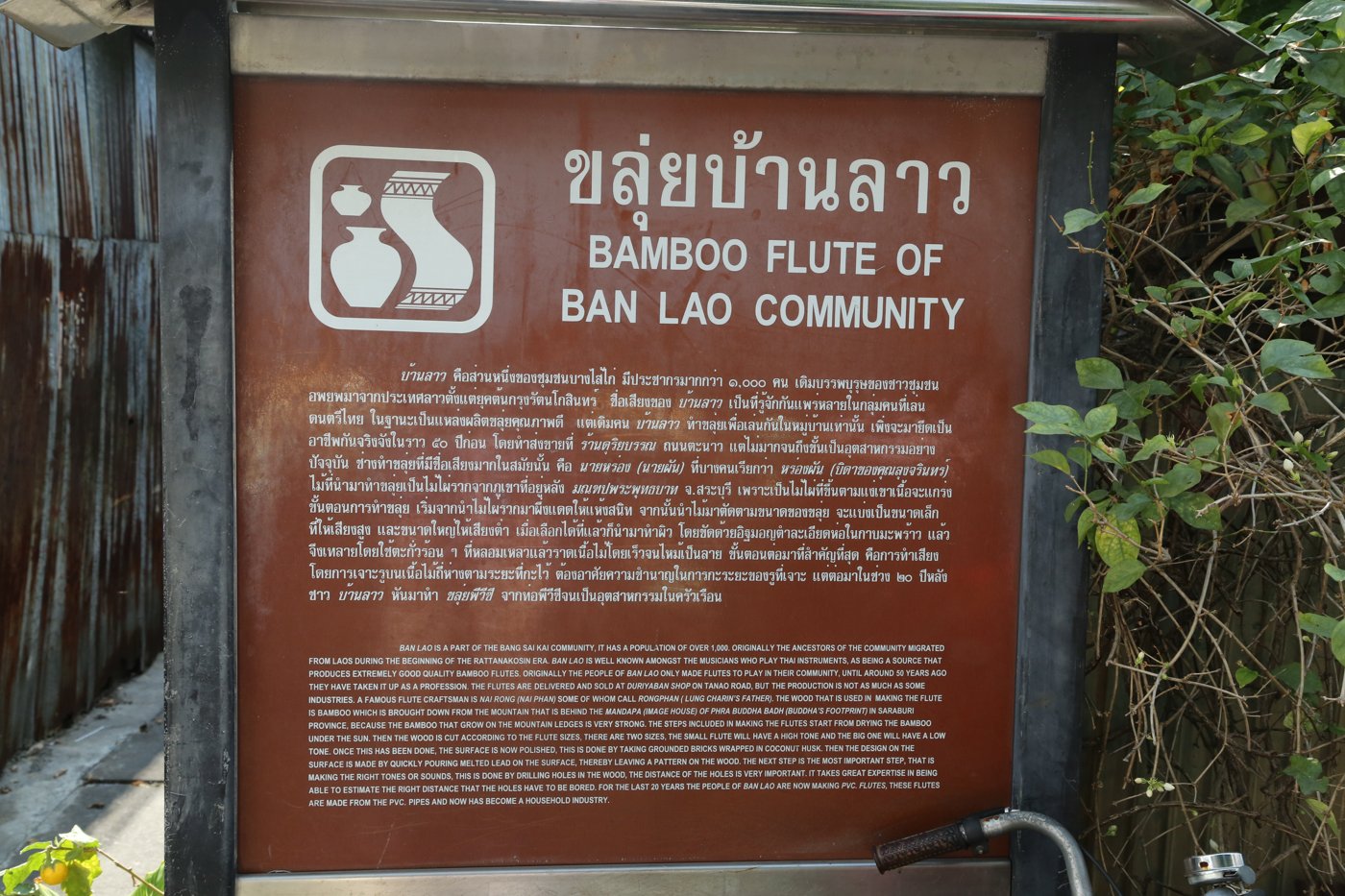
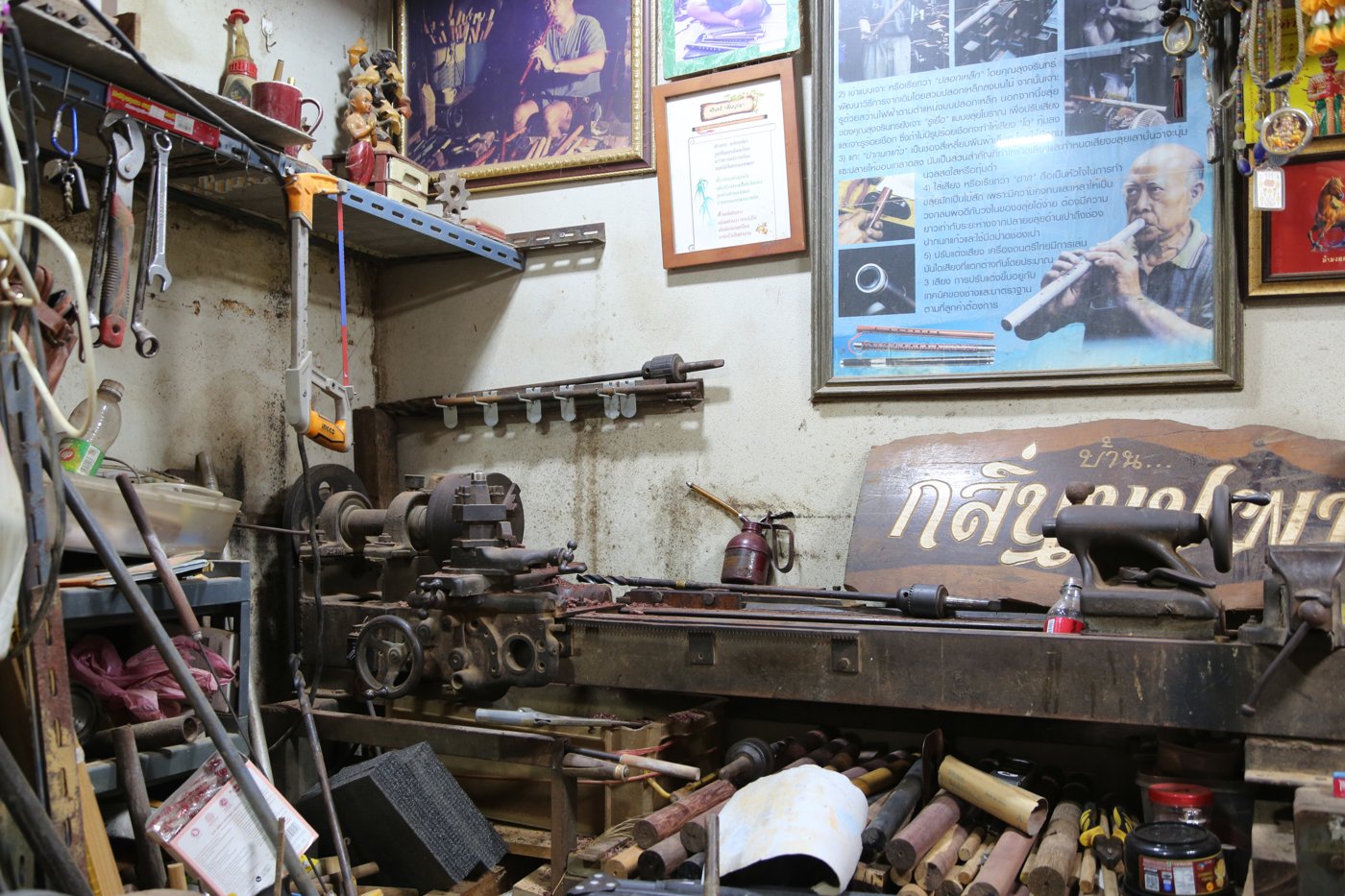
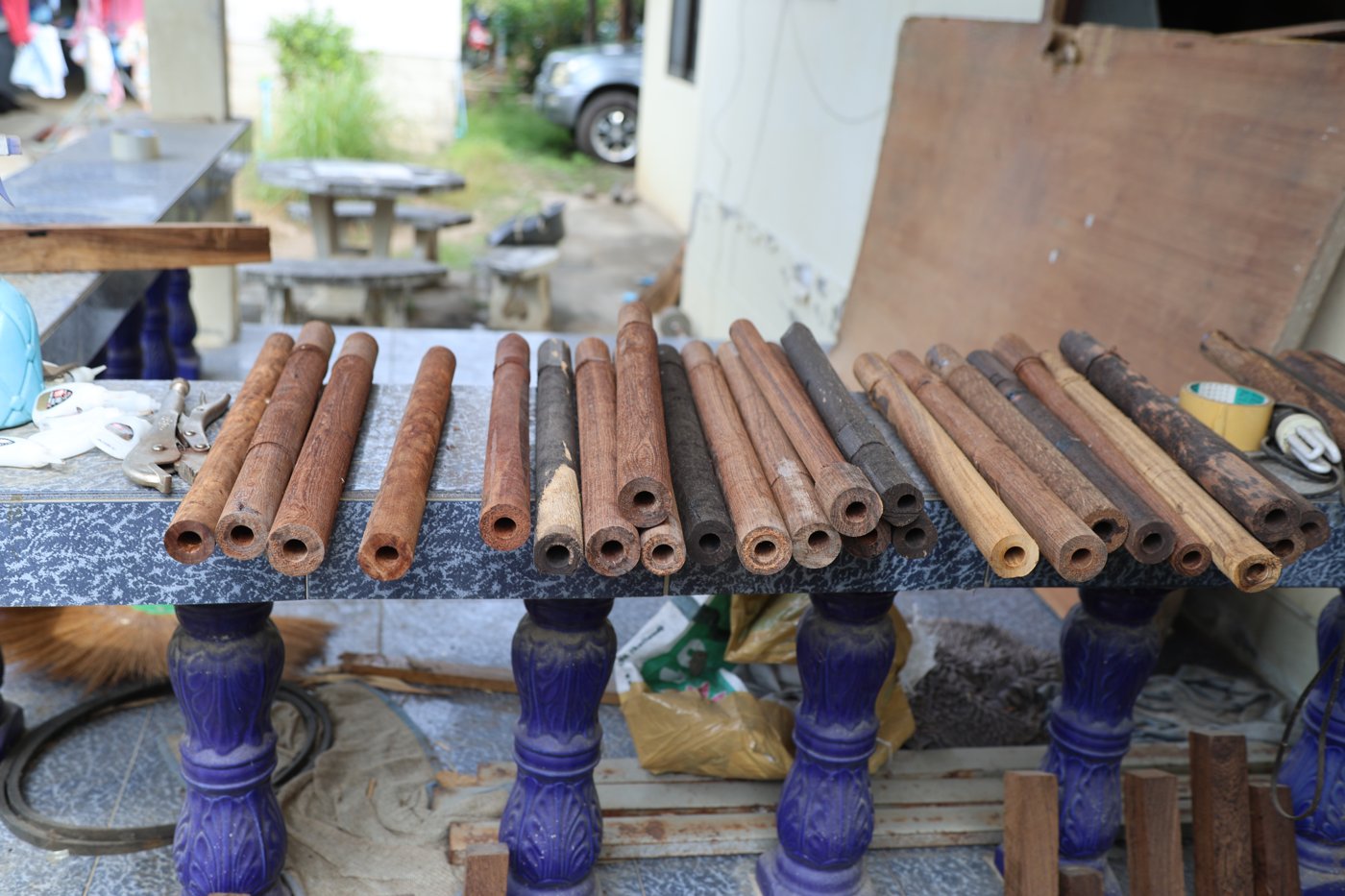

Northern Thailand 2025
Recordings and photographs among Akha, Hmong, Lahu, Lisu and Lua communities, the Poy Sang Long festivals in Mae Hong Son and Mae Chaem, the large drums of Mae Chaem and gong ensembles in Mon temples.
The Mong Kang gong ensemble
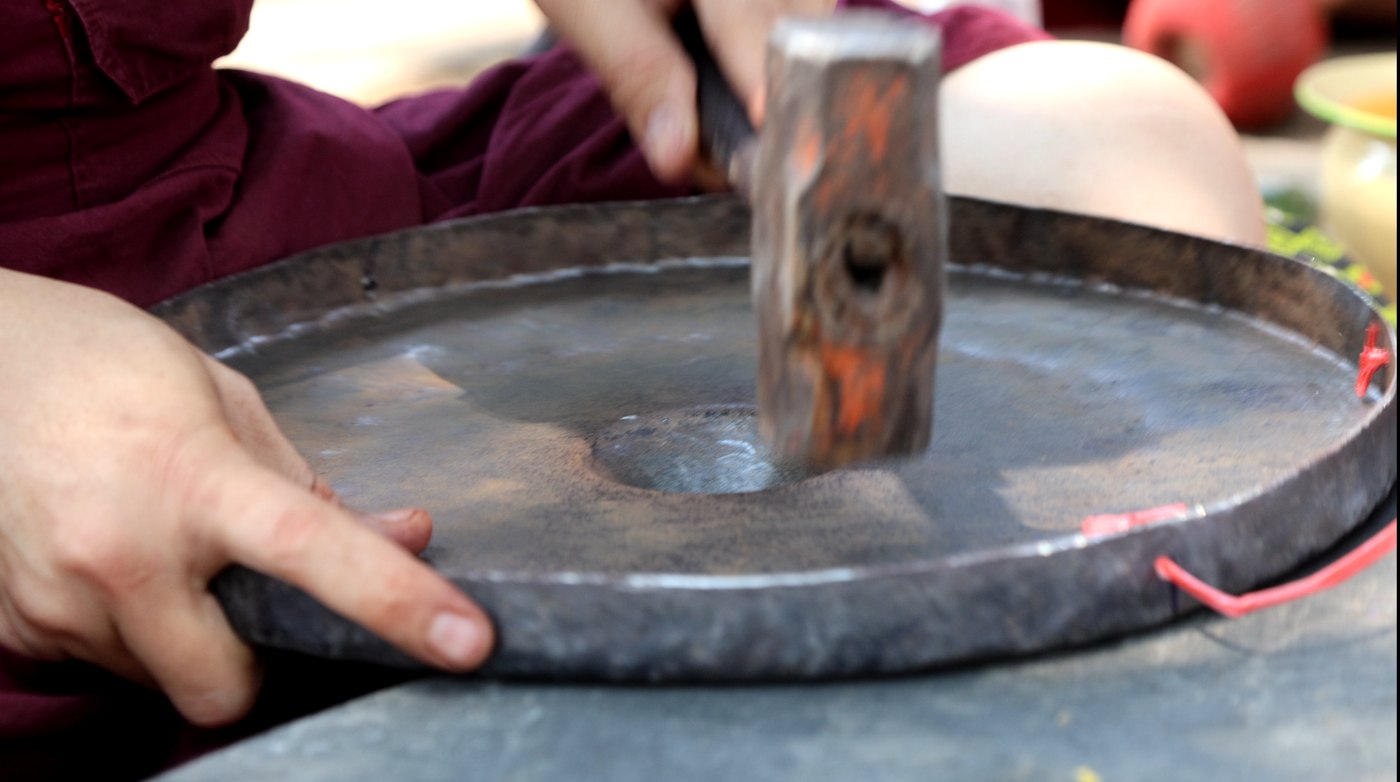
The Mong Kang (“set of gongs”) is a ceremonial instrument of Northern Thailand, usually played together with drums. Seven bossed gongs hang in a wooden frame and are struck all at once by a single lever mechanism – the instrument does not play melodies but one combined sound. Unlike the cast bronze gongs of Javanese gamelan, its gongs are hammered from sheet metal. During fieldwork we interviewed a monk who makes such gongs and followed how they are hammered and tuned, then measured the single gongs and the full ensemble.
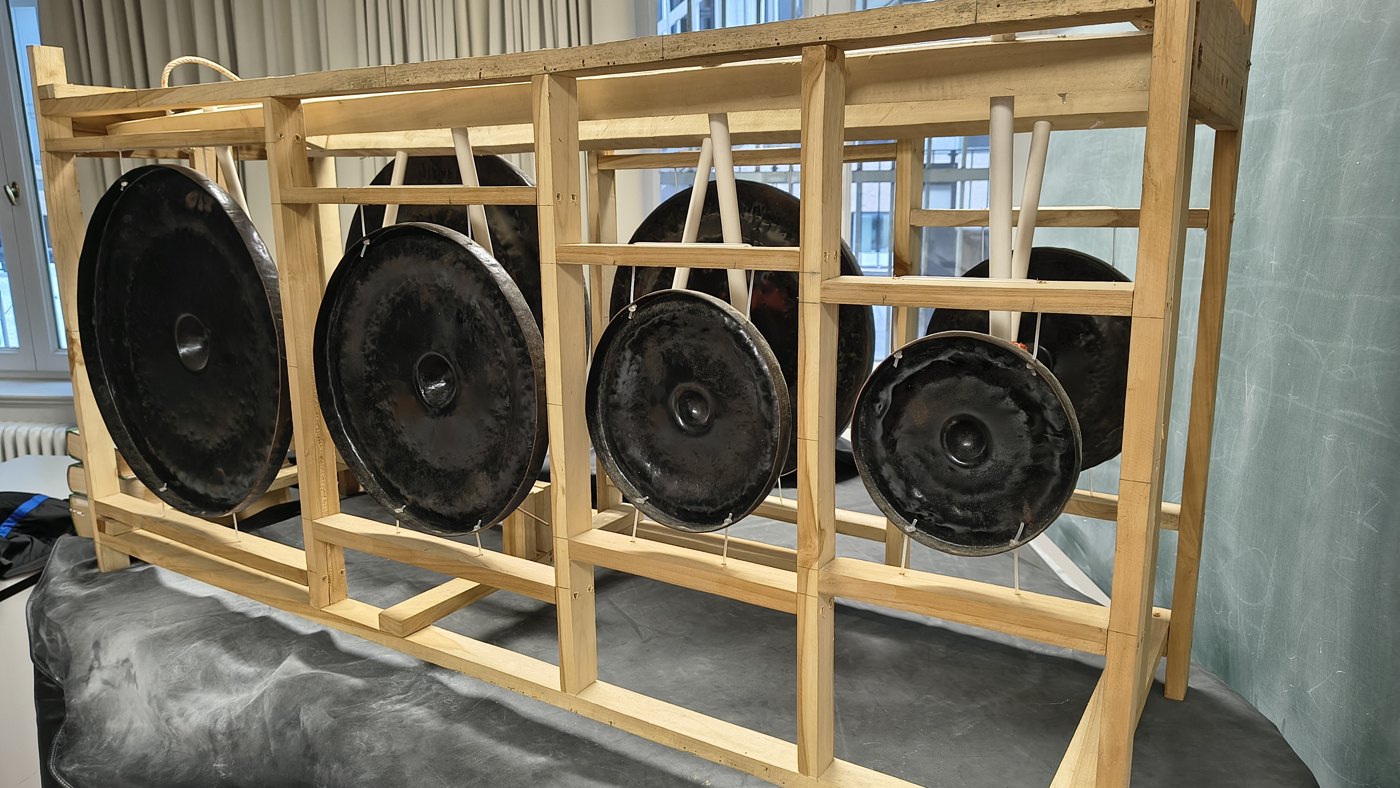
What we found. The gongs are tuned towards the sound of the whole ensemble rather than each on its own: the strongest partials of the higher gongs fall almost exactly onto the harmonic series of the lowest gong (B♭2). Only at high frequencies do the partials drift apart slightly – a limit of the hammering, or deliberate beating? The fractal correlation dimension confirms the picture: the ensemble sounds as ordered as a single gong. The traditional tuning practice thus arrives at a principle that modern piano tuning reaches by minimising entropy.
Literature
Linke, S. et al.: Paper on the Mong Kang gong ensemble. International Symposium on Musical Acoustics (ISMA) 2026, Helsinki. Submitted to Proceedings of Meetings on Acoustics (POMA), under review.
Literature
Zamboni, F., Mirsalehie, H. R. & Bader, R.: Blowing-machine timbre and laser microscopy inner wall roughness measurements of six Thai Khlui Flutes. Proceedings DAGA 2026, 975.
Bader, R.: Temperament in Tuning Systems of Southeast Asia and Ancient India. In: R. Bader (ed.): Computational Phonogram Archiving, Springer 2019, 75-108.
Recent Comments